

Akita
Other Names: American Akita, Japanese Akita, Akita Inu, Japanese Akita Inu, Great Japanese Dog (obsolete)
Country of Origin: Japan
Accreditation:
American Kennel Club (AKC): Working
Canadian Kennel Club (CKC): Working
United Kennel Club (UKC): Northern Breed
Australian National Kennel Council (ANKC): Utility
The Kennel Club (KC): Utility
Kennel Union of Southern Africa (KUSA): Utility, Working Dogs
National Kennel Club (NKC): Recognized
New Zealand Kennel Club (NZKC): Utility
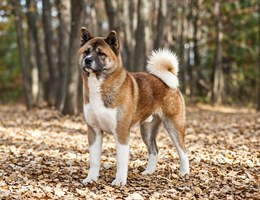
The Akita is a large dog with heavy bones, and a large, bear–like head, with erect, triangular ears set at a slight angle following the arch of the neck. The eyes of the Akita are small, dark, deeply set and triangular in shape. Akitas have thick double coats, and tight, well knuckled cat feet. Their tails are carried over the top of the back in a graceful sweep down the loin, into a gentle curl, or into a double curl. The American Akita is generally heavier boned and larger, with a more bear–like head, whereas the Japanese Akita tends to be lighter and more finely featured. The Akita's double, thick coat makes him waterproof, and well–equipped for the fierce winters in northern Japan.
A large, reserved house dog with a dense shedding coat; calm indoors if exercised, but a poor first choice for a small apartment or a noisy, chaotic household.
- Height
- Male: 24–28 inches; Female: 24–26 inches
- Weight
- Male: 75–130 pounds; Female: 70–100 pounds
- Color
- American Akitas come in all colors, including pinto, and may have black masks. Japanese Akitas come in red, fawn, sesame, white, or brindle.
- Coat
- Coarse, straight, with soft undercoat
- Lifespan
- 10–13 years
- Litter size
- 6–8 puppies
Temperament
Training
Care and grooming
Shedding
Health
Crosses that include the Akita
These hybrid pages list this breed as a parent. Open a name to see the other contributing breed.
EIW.com Copyright © 2003 - 2026 All Rights Reserved
EIW.com accepts no responsibility for the accuracy of the advertisements placed on the EIW.com website or for the contents of any website to which a hypertext link from EIW.com links. The Seller Ads and links to products and/or services are provided as a service, and EIW.com gives no warranties, expressed or implied, about the information and/or policies of the Seller Ads or the linked-to webites, or of the information shown.
EIW.com is the sole owner of the services and of all information provided by and posted to the EIW.com website. The use, reproduction, or storing of content for any purpose other than to contact a Seller, purchase a product or service, or compare prices is prohibited. You cannot use the information provided by EIW.com to recreate a directory, rebrand the informaton or redistribute the information in any way. Information provided by EIW.com is for individual, non-commercial use only. All information, processes and content contained within and that make up the services are the sole property of EIW.com. You may not reproduce, duplicate or redistribute any information provided by EIW.com for profit or personal gain of any kind. You may not frame any content or pages contained within the EIW.com website unless expressly granted permission by EIW.com.